Touchscreen control panel (HMI)
Use the resistive touch layer to build on-screen buttons, sliders, and menus that control relays, motors, or device settings without physical switches.
A 2.8-inch color TFT display driven by the ILI9341 controller over 4-wire SPI, with 320x240 resolution, an onboard microSD slot, and an optional resistive touch panel.
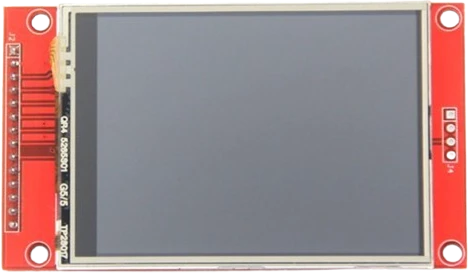
The ILI9341 TFT 2.8-inch (the LCDWiki MSP2807 breakout) is a 2.8-inch color TFT LCD built around the ILI9341 display controller. It has a native resolution of 240x320 pixels and renders 65K colors in 16-bit RGB565 mode, with the controller also supporting 262K color. Communication is over a 4-wire SPI bus, so it can drive a full-color graphical interface using only a handful of I/O lines.
The module runs from a single 5V supply (VCC accepts 3.3-5V) and draws roughly 0.31W. It carries an onboard 3.3V regulator and logic level shifting, so both the supply and the SPI signals may be 5V, which lets it connect directly to an Arduino Uno or Mega without external level converters. Alongside the display lines (CS, RESET, DC/RS, SDI/MOSI, SCK, and an LED backlight enable), the board adds a microSD card slot for storing images or fonts.
The MSP2807 variant includes a resistive touch panel driven by a separate touch controller on its own SPI bus, broken out as T_CLK, T_CS, T_DIN, T_DO, and T_IRQ. A non-touch sibling ships as the MSP2806. The active display area measures 43.2 x 57.6 mm on a 50 x 86 mm PCB, with a viewing angle greater than 60 degrees and rated operation from -20 to 70 degrees C.
| Pin | Function | Type |
|---|---|---|
VCC VCC (3.3-5V) | Power | Power in |
GND GND | Power | Power in |
CS CS | SPI CS | Digital input |
RESET RESET | Digital active-low reset | Digital input |
DC DC / RS | SPI data/command select | Digital input |
MOSI SDI / MOSI | SPI MOSI | Digital input |
SCK SCK | SPI SCK | Digital input |
LED LED (backlight) | Digital backlight enable, tie high if no PWM dimming | Digital input |
MISO SDO / MISO | SPI MISO | Digital output |
T_CLK T_CLK | SPI touch SCK | Digital input |
T_CS T_CS | SPI touch CS | Digital input |
T_DIN T_DIN | SPI touch MOSI | Digital input |
T_DO T_DO | SPI touch MISO | Digital output |
T_IRQ T_IRQ | Digital touch interrupt, active-low on touch | Digital output |
Verified from the Tinkered component library · LCDWiki / generic ILI9341 breakout (MSP2807).
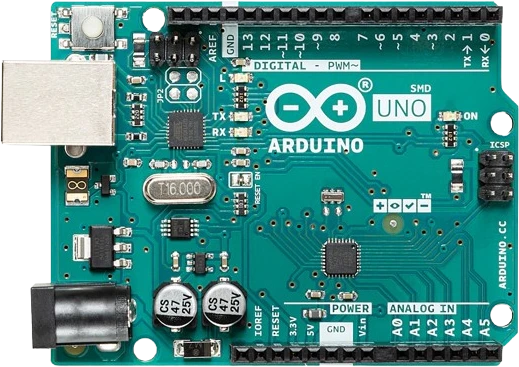
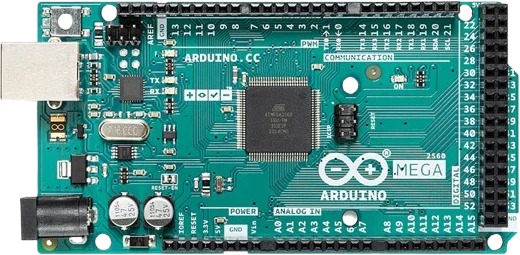
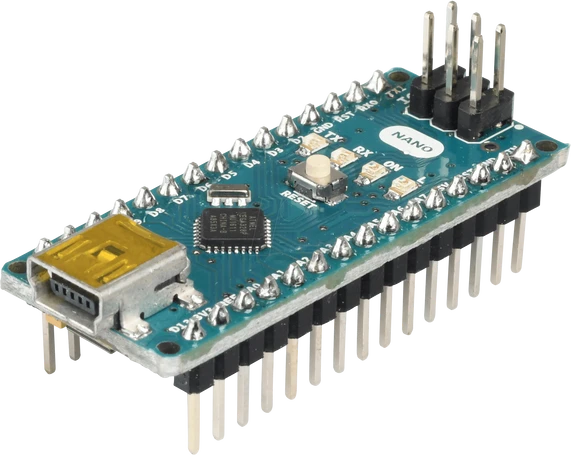
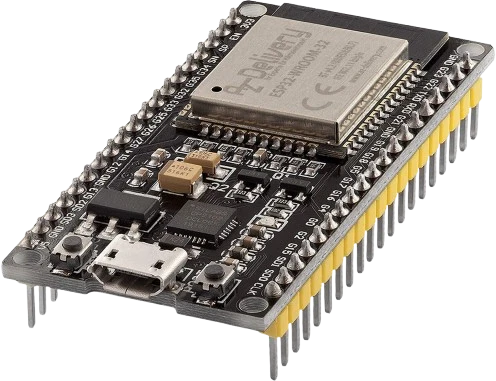
The ILI9341 TFT 2.8-inch connects to any of the microcontrollers supported in Tinkered. Mind the 5 V logic level on 3.3 V boards.
This 2.8-inch ILI9341 board is SPI only, so there is no I2C address to scan. Wire it to the SPI pins (SCK, MOSI) plus CS, DC/RS, and RESET, and select an ILI9341 SPI driver in your graphics library.
The LED pin is an active-high backlight enable. If it floats, the panel stays dark even when the controller is initialized correctly, which is easily mistaken for a dead display. Tie it high (3.3V or 5V) or drive it from a PWM pin for dimming.
DC/RS (data/command select) is a required control line, separate from CS and RESET. Swapping it with RESET or leaving it off yields a blank or garbled screen. Make sure your library's DC and RST assignments match the actual wiring.
The MSP2807 red PCB includes a 3.3V regulator and level shifter, so it accepts 5V power and logic. Many cheaper bare 2.4-inch and 2.8-inch ILI9341 modules do not and can be damaged by 5V signals, so confirm your board matches this one before driving it from a 5V Arduino.
The resistive touch panel is a second SPI device with its own T_CS line. Sharing MOSI, MISO, and SCK is fine, but forgetting T_CS (or reusing the display's CS) makes touch reads collide with the display. The touch layer also needs calibration before coordinates line up with the screen.
Use the resistive touch layer to build on-screen buttons, sliders, and menus that control relays, motors, or device settings without physical switches.
Show color readouts and live graphs of temperature, humidity, and other sensor data on a compact, always-on display.
The 320x240 resolution is a classic size for simple games and emulators, with fast enough SPI redraws for sprite-based UIs.
Load and display bitmap images straight from the onboard microSD card slot, cycling through a gallery.
Plot real-time waveforms or logged values on screen, using the SD slot to store captures for later review.
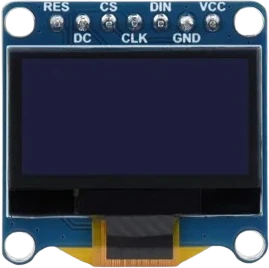
oled-128x64Monochrome I²C display
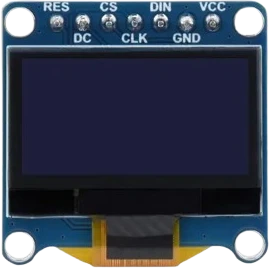
oled-sh1107-128x128Square monochrome OLED
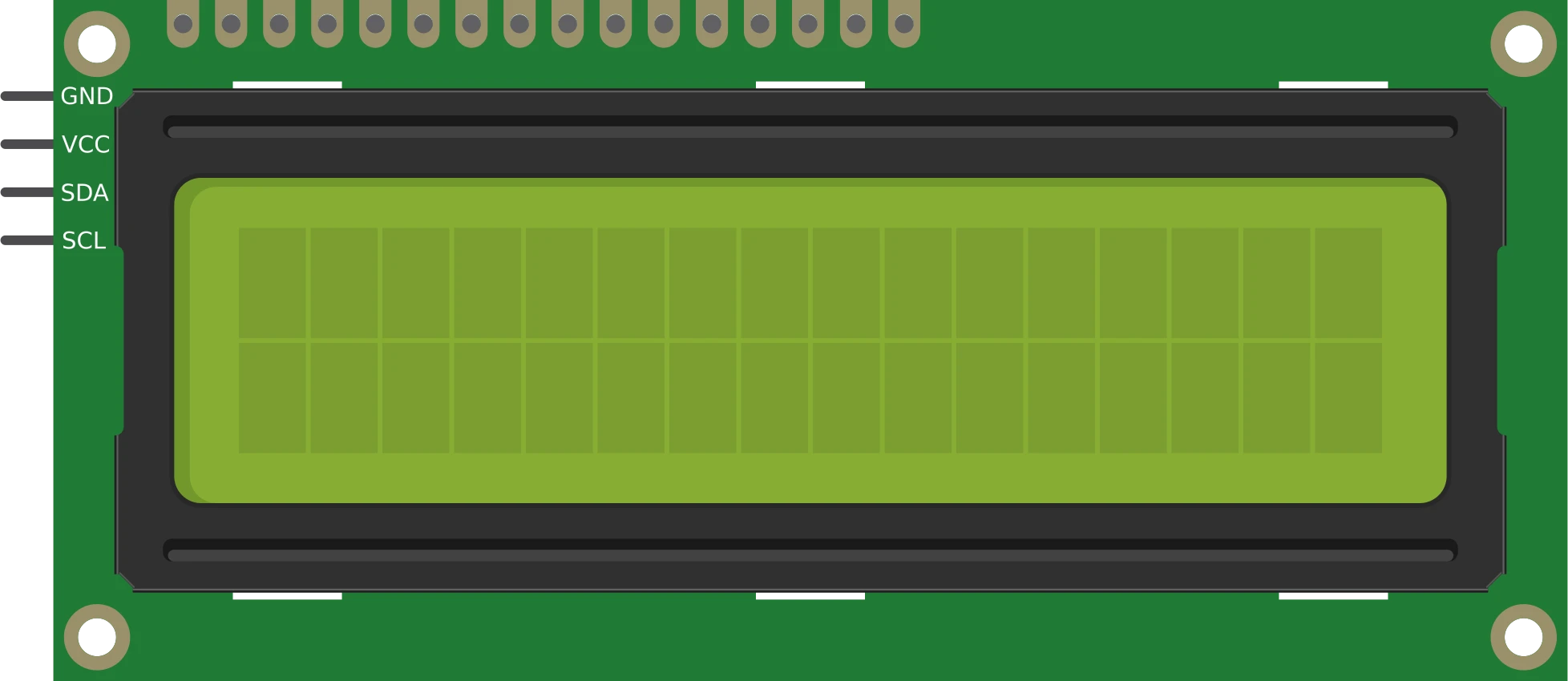
lcd-1602-i2c16×2 character display
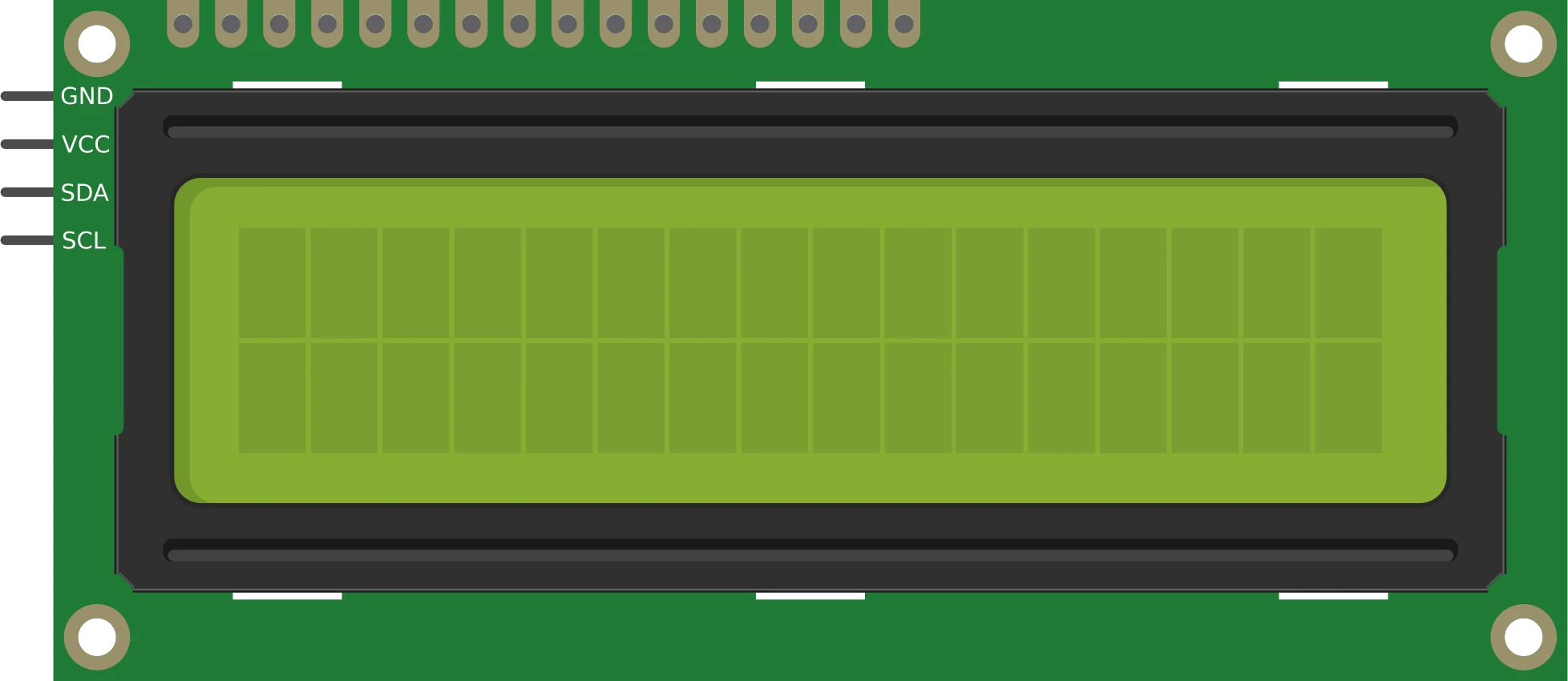
lcd-1602-parallel16×2 character display
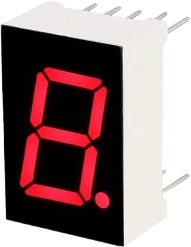
7seg-displaySingle numeric digit
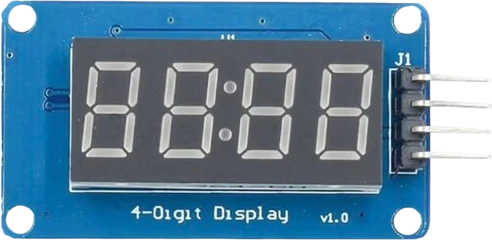
tm1637-4digit-displayFour-digit segment module
Drop the ILI9341 TFT 2.8-inch into a circuit, write firmware, and simulate it in your browser, then deploy to real hardware. All in one editable Tinkered project.