Occupancy-aware room lighting
Wire OUT to a microcontroller or relay so lights stay on while someone is present, including when they sit still at a desk or couch, and turn off only after the configured absence delay.
A 24GHz FMCW mmWave radar module from Hi-Link that detects both moving and stationary humans indoors, with a simple presence pin and a configurable UART interface.
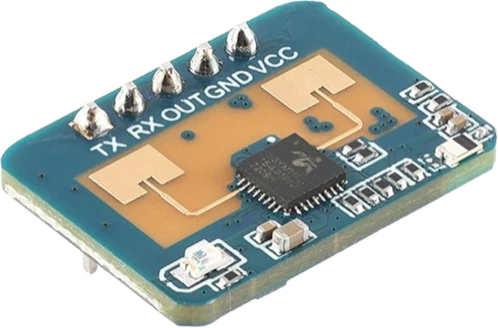
The LD2410C is a 24GHz millimeter-wave radar presence sensor built around Hi-Link's FMCW (frequency-modulated continuous wave) engine. Instead of sensing body heat the way a PIR does, it measures radar reflections, so it can detect a person who is sitting, lying, or otherwise nearly motionless, not just someone walking through the beam. It covers roughly 0.75 to 6 meters (eight 0.75 m distance gates) across a wide detection angle of about plus or minus 60 degrees, operating in the 24 to 24.25 GHz ISM band with a 250 MHz sweep bandwidth.
The module gives you two ways to read it. The OUT pin is a plain digital presence signal that goes 3.3V HIGH when a human is detected and LOW when the space is empty, which is all you need for basic occupancy triggers. The TX and RX pins expose a 256000-baud UART that streams richer data: moving and stationary target state, target distance, and per-gate energy. Detection behavior is fully configurable over that serial link or wirelessly through Hi-Link's HLKRadarTool app via the module's built-in Bluetooth, letting you set the maximum detection gate, per-gate sensitivity, and the absence (no-one) hold time.
Because it uses radar rather than heat or light, the LD2410C is unaffected by ambient temperature, brightness, or air currents, and it can work hidden behind a non-metallic enclosure. It runs from a 5V supply at roughly 79 mA average, making it a popular, low-cost upgrade over PIR sensors for reliable indoor human presence detection.
| Pin | Function | Type |
|---|---|---|
TX TX | UART TX (256000 baud) | Digital output |
RX RX | UART RX (256000 baud) | Digital input |
OUT OUT | Digital presence: HIGH = human detected, 3.3V | Digital output |
GND GND | Power | Power in |
VCC VCC (5-12V) | Power | Power in |
Verified from the Tinkered component library · Shenzhen Hi-Link Electronic (HLK-LD2410C).
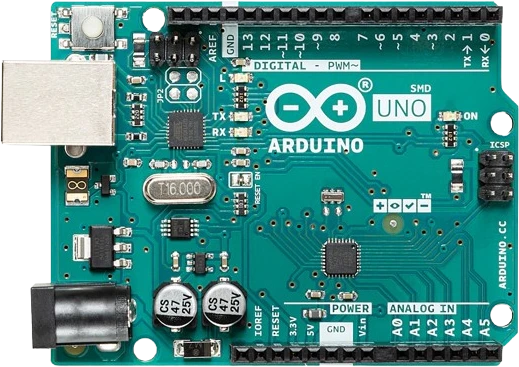
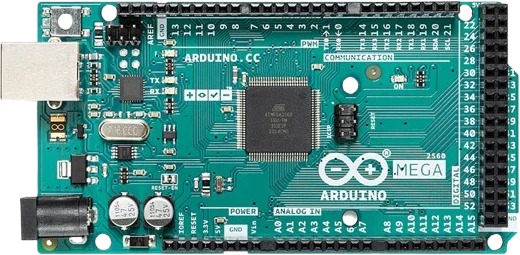
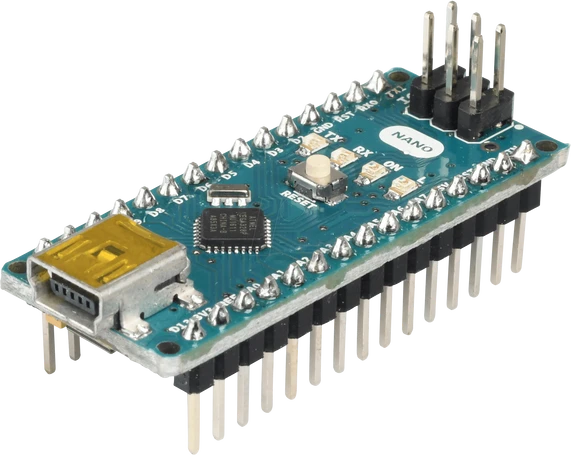
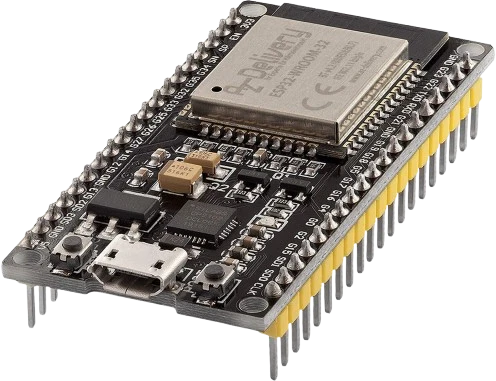
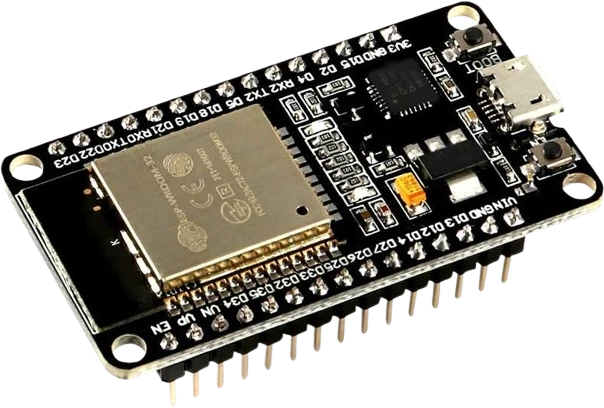
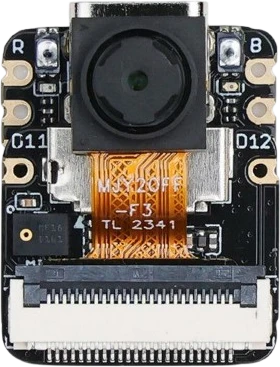
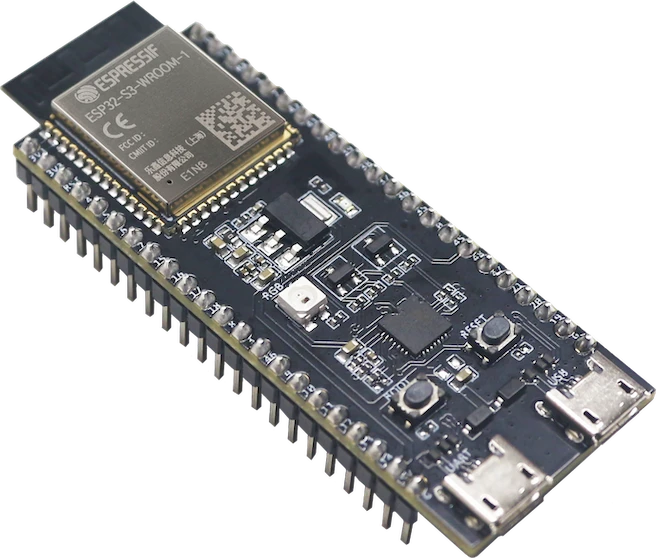
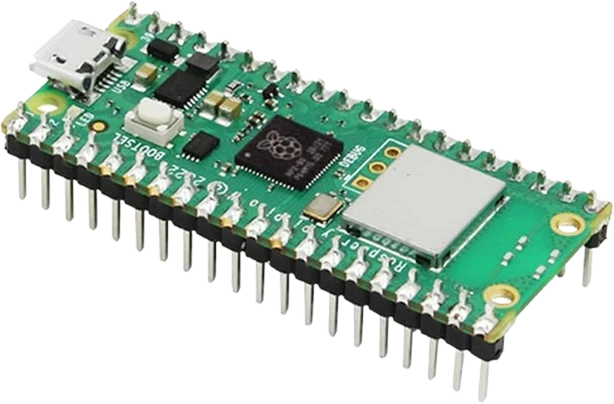
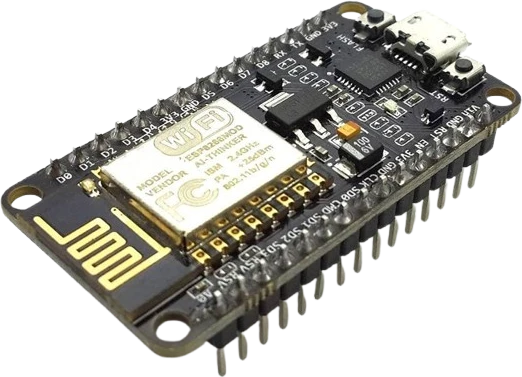
The LD2410C mmWave Radar connects to any of the microcontrollers supported in Tinkered. Mind the 5 V logic level on 3.3 V boards.
The serial pins are 3.3V logic and not 5V tolerant. Wiring a 5V board's TX straight into the sensor RX can damage it. Add a level shifter or divider on that line, even though OUT and the sensor's TX can be read directly by a 5V input.
The default baud rate is 256000, which is too fast for SoftwareSerial on an Uno or Nano and produces garbled frames. Configure the UART on a hardware serial port, or use a host like the ESP32 with multiple hardware UARTs.
The LD2410C also senses stationary and micro-moving people, so a seated occupant keeps OUT HIGH. Without tuning per-gate sensitivity and the no-one hold time, it can appear to never switch off, or it can trip on small movements you did not intend to catch.
Metal blocks the 24GHz signal, and fans, swaying curtains, HVAC airflow, or pets all reflect radar and cause false detections. Follow the datasheet mounting geometry and keep the field of view clear of moving clutter.
VCC is a 5V input, not 3.3V, and the supply must handle over 200mA including current spikes. Undersized rails or thin USB leads cause brownouts that show up as random false triggers or dropouts.
Wire OUT to a microcontroller or relay so lights stay on while someone is present, including when they sit still at a desk or couch, and turn off only after the configured absence delay.
Pair the UART with an ESP32 running ESPHome to publish moving and stationary target state, distance, and energy per gate into Home Assistant for room-level presence automations.
Use radar presence to keep heating, cooling, or a monitor active only while a room is genuinely occupied, cutting energy use compared to timer-only or PIR-based control.
Take advantage of stationary detection to sense a person lying in bed, using the UART distance and energy data as a low-cost, contactless presence indicator.
Drop the LD2410C mmWave Radar into a circuit, write firmware, and simulate it in your browser, then deploy to real hardware. All in one editable Tinkered project.