Motion-activated lighting
Drive a relay or MOSFET from OUT to switch a lamp or LED strip on when someone enters, using the built-in 2-second hold as a simple on-timer.
RCWL-0516 is a low-cost microwave Doppler radar motion sensor that outputs a simple digital HIGH when it detects movement, with no infrared optics required.
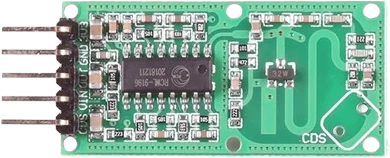
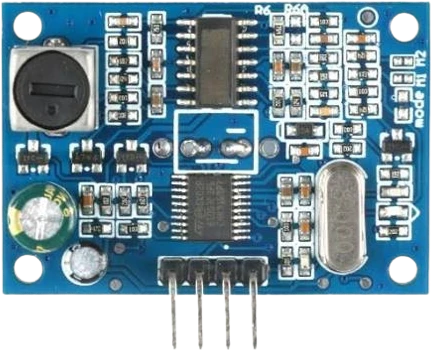
The RCWL-0516 is a microwave motion sensor built around the RCWL-9196 IC. Unlike a PIR sensor, which reads infrared body heat, it transmits a low-power microwave signal (roughly 3.2GHz, varying slightly between units) and watches for the Doppler frequency shift caused by a moving object. The result is a single active-high digital trigger that is easy to read from any microcontroller.
Power comes in on VIN, which accepts anywhere from 4 to 28V (a 5V rail from an Arduino works well), and the board draws only a few milliamps (about 3mA maximum) at roughly 30mW of transmit power. An onboard regulator provides a 3.3V output rail rated up to 100mA for powering small companion parts. The OUT pin idles at 0V and drives to 3.3V for about 2 seconds when motion is detected, re-extending that window as long as movement continues.
Detection range is approximately 5 to 7 meters and the sensing pattern is largely non-directional. Because microwaves pass through thin non-metal materials such as drywall, plastic, and glass, the module can be hidden behind an enclosure wall, but it will also see motion in adjacent rooms. An optional CDS pin lets you attach a light-dependent resistor so detection is disabled in bright light, which is handy for dusk-to-dawn lighting projects.
| Pin | Function | Type |
|---|---|---|
3V3 3V3 (out, 100mA) | Power | Power out |
GND GND | Power | Power in |
OUT OUT | Digital motion trigger: HIGH (3.3V) ~2s on detection | Digital output |
VIN VIN (4-28V) | Power | Power in |
CDS CDS | Analog LDR input — light on the CDS pin disables detection | Digital input |
Verified from the Tinkered component library · Generic (RCWL-9196 based module).
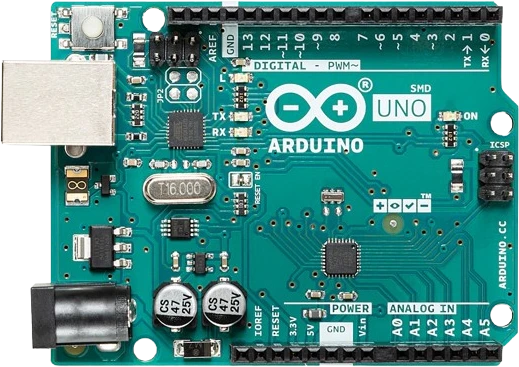
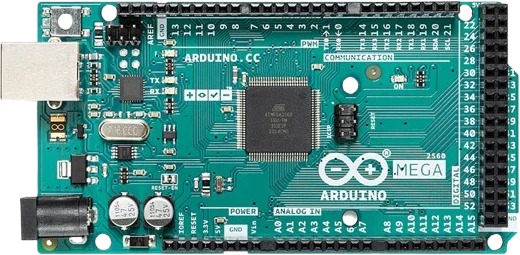
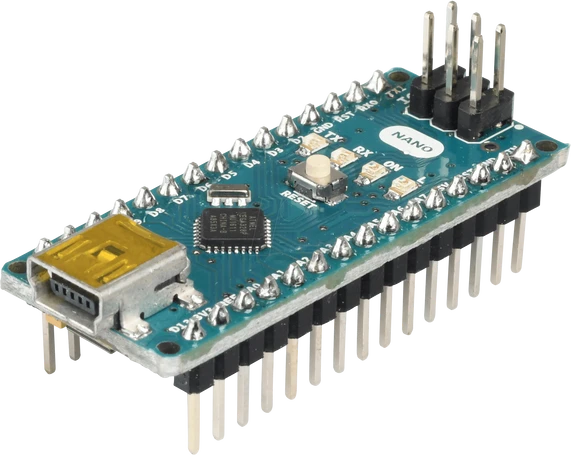
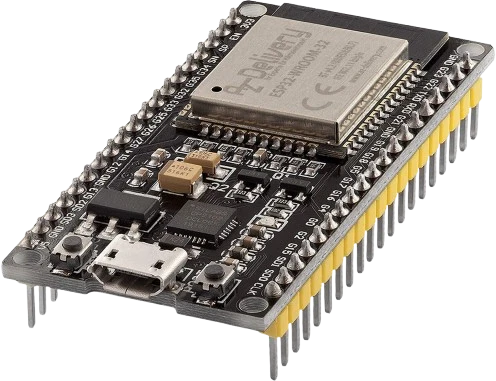
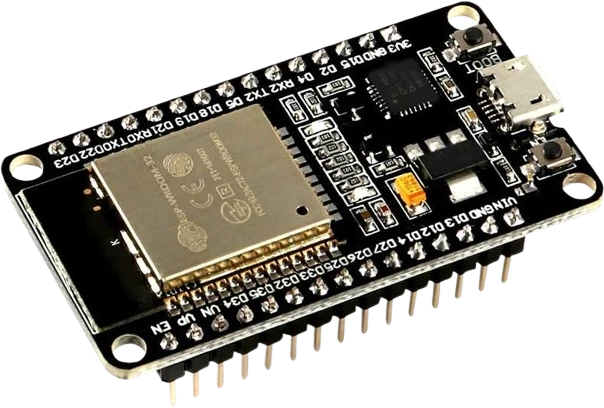
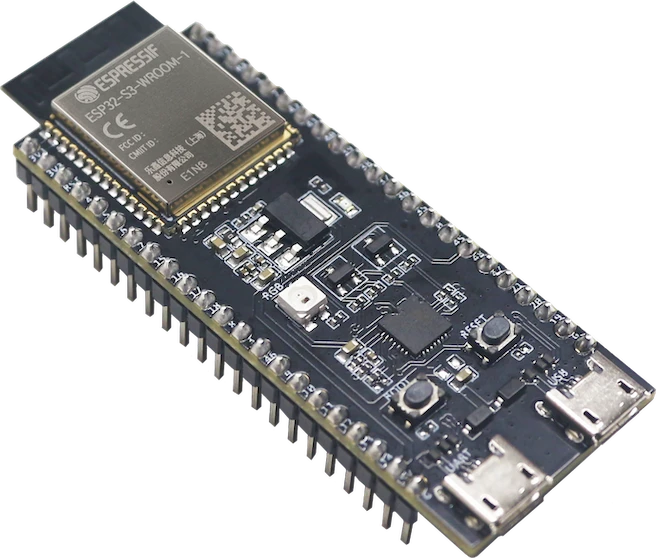
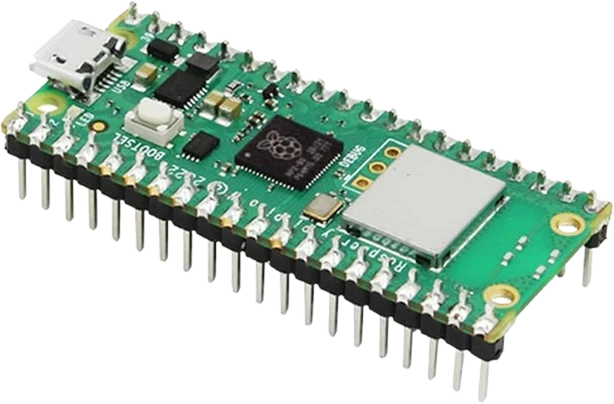
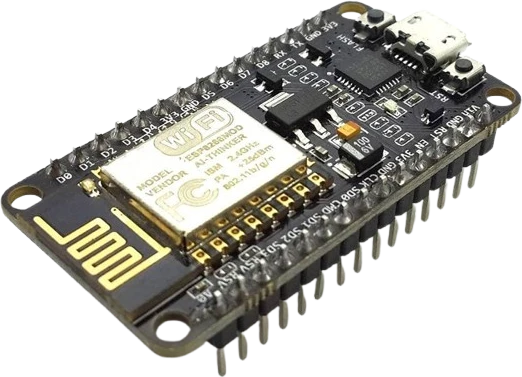
The RCWL-0516 connects to any of the microcontrollers supported in Tinkered. Mind the 5 V logic level on 3.3 V boards.
OUT drives to 3.3V, not 5V. It reads correctly as HIGH on a 5V Arduino digital pin, but it cannot directly drive logic or devices that require a true 5V HIGH level.
Microwave sensitivity depends on a clear antenna. Placing the board flat against metal, or sealing it in a metal enclosure, detunes it and greatly reduces or eliminates detection. Leave at least 1cm of clearance behind the board.
Microwaves pass through drywall, plastic, and glass, so the sensor readily detects people moving in the next room or outside a thin enclosure. Plan placement and range accordingly to avoid unwanted triggers.
The CDS pin is a light-disable input, not a general I/O. Pulling it low (or shining light on an attached LDR) turns detection off. If you want always-on behavior, simply leave CDS unconnected so the internal 1M pull-up keeps the output enabled.
Each detection holds OUT HIGH for about 2 seconds and retriggers while motion continues. Code that expects the line to drop immediately when motion stops will see it stay high, so debounce and time your logic around the hold period.
Drive a relay or MOSFET from OUT to switch a lamp or LED strip on when someone enters, using the built-in 2-second hold as a simple on-timer.
Add an LDR to the CDS pin so the sensor only triggers in darkness, then combine it with a lamp for automatic night-only porch or garage lighting.
Mount the board behind a plastic panel or inside a non-metal enclosure to detect people through the wall for concealed room-occupancy or smart-home automation.
Use the OUT pulse as an interrupt to wake a sleeping ESP8266, ESP32, or Arduino, keeping a battery project idle until real motion occurs.
Pair the sensor with a Wi-Fi microcontroller to send a phone or dashboard notification whenever motion is detected in a monitored space.
Drop the RCWL-0516 into a circuit, write firmware, and simulate it in your browser, then deploy to real hardware. All in one editable Tinkered project.