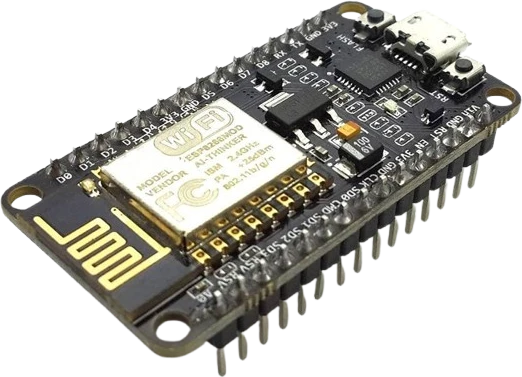
Multi-joint robotic arm
Its 9-11 kg-cm of torque and metal gears make the MG996R a workhorse for lifting and holding arm segments at each joint.
A high-torque metal-gear standard servo (TowerPro MG996R) that swings roughly 180 degrees under 50Hz PWM control, shipped here with a 4-arm cross horn on its 25-tooth spline.
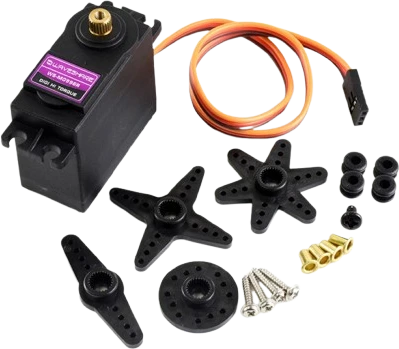
The MG996R is TowerPro's high-torque standard-size servo, an upgraded successor to the MG995 that adds metal gearing, dual ball bearings, and a revised control PCB for tighter centering and a narrower dead band. It is a positional servo: a PWM pulse commands an absolute shaft angle across a travel of about 180 degrees (roughly 90 degrees each side of center), not continuous rotation. This variant ships with a cross-shaped (four-arm) output horn fitted to the 25-tooth output spline.
Electrically it runs on 4.8 to 7.2V. Stall torque is about 9.4 kg-cm at 4.8V, rising to about 11 kg-cm at 6V, with the shaft moving faster at the higher voltage. Position is set by a standard servo pulse: a 50Hz (20ms period) signal whose high time of roughly 1 to 2ms selects the angle, with about 1.5ms holding the neutral center. The three leads are power (red), ground (brown), and the PWM signal (orange), and the servo works with 3.3V or 5V logic-level pulse sources.
Because the internal motor can draw on the order of 2.5A when stalled, the MG996R is best driven from its own supply rather than an Arduino's onboard regulator. It is a common choice for robotic arm joints, pan-tilt camera mounts, RC steering and throttle linkages, walking-robot legs, and latch or gate mechanisms where its torque and metal gears are worth the extra current budget.
| Pin | Function | Type |
|---|---|---|
VCC VCC (4.8-7.2V) | Power | Power in |
GND GND | Power | Power in |
SIG PWM Signal | PWM servo control pulse | Digital input |
Verified from the Tinkered component library · TowerPro.
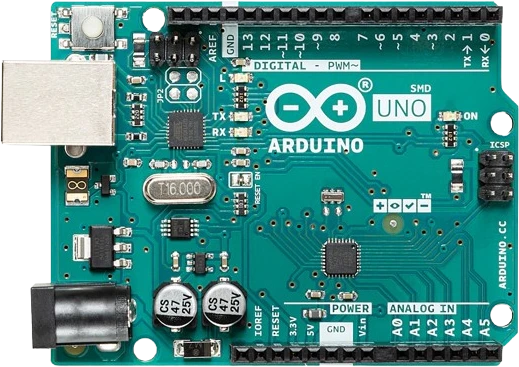
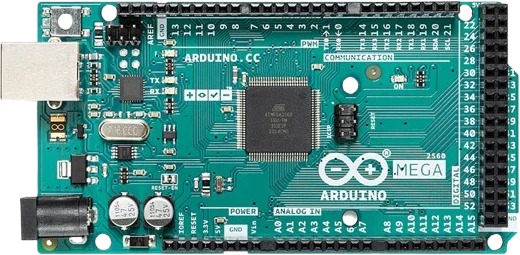
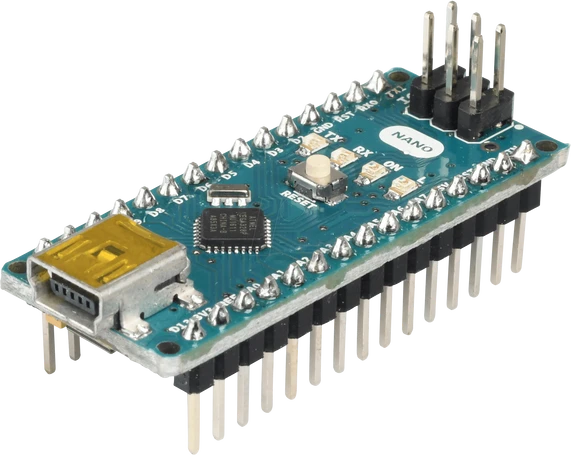
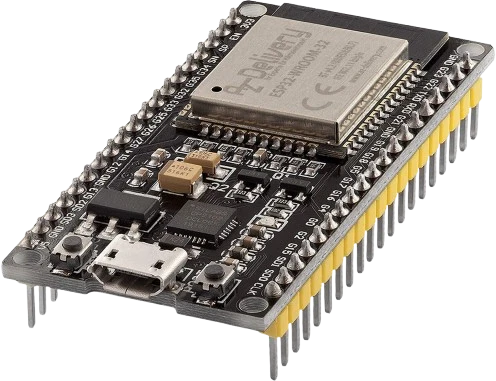
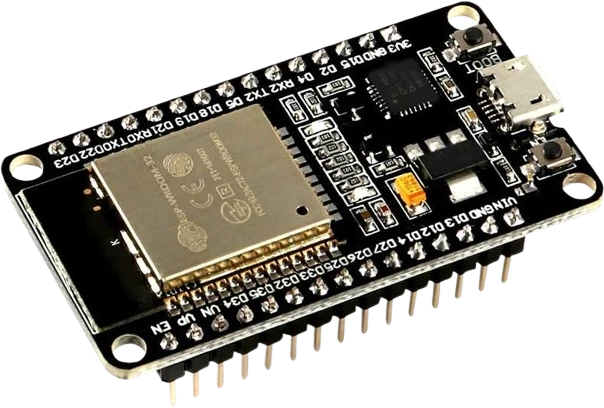
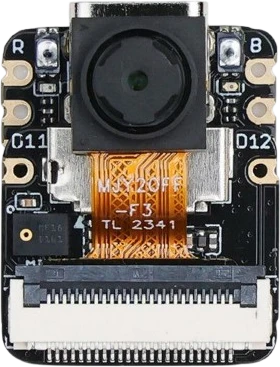
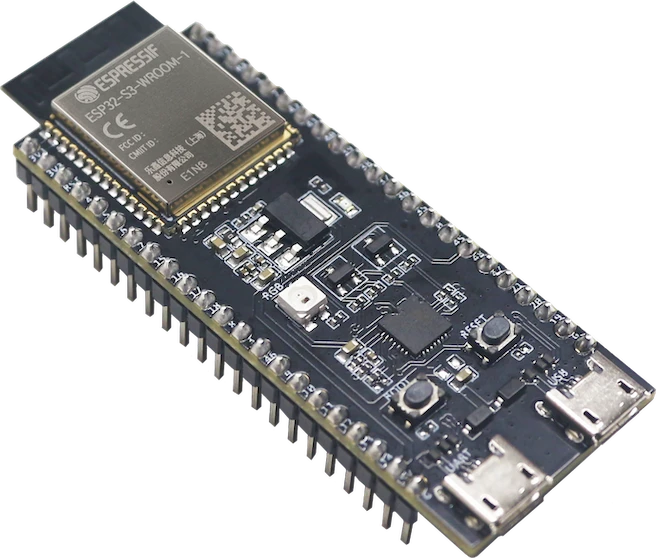
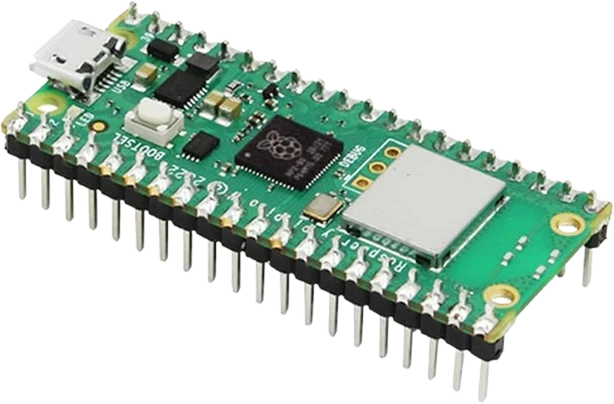
The MG996R Servo · Cross Horn connects to any of the microcontrollers supported in Tinkered. Mind the 6 V logic level on 3.3 V boards.
The MG996R can pull about 2.5A at stall, far beyond what an Arduino's regulator or a USB port can supply. Doing so causes voltage sag, random resets, and undervoltage jitter. Use a separate battery or supply and share grounds.
When the servo runs on its own supply, the signal line still needs a shared ground reference with the microcontroller. Leave it out and the servo twitches, buzzes, or ignores commands entirely.
This servo is rated 4.8 to 7.2V. Wiring it to a 9V battery or a 12V rail because 'more volts means more torque' overheats the motor and control board and can destroy it.
This is the positional 180-degree MG996R, not the continuous-rotation version that shares the same body. Commanding it like a wheel motor only drives it against its internal end stops and can strain the gears.
Center the servo (about a 1.5ms pulse) before pressing the cross horn onto the 25-tooth spline, and never rotate the shaft by hand past its mechanical limits. Back-driving or over-travel can strip the metal gears.
Its 9-11 kg-cm of torque and metal gears make the MG996R a workhorse for lifting and holding arm segments at each joint.
Two MG996Rs give a sturdy, high-torque platform for aiming a camera, ultrasonic sensor, or laser across a wide field of view.
The JR/Futaba-compatible connector and standard pulse signal drop straight into RC cars and boats needing extra steering force.
Hexapod and quadruped builds use banks of MG996Rs for leg joints where torque-to-size and metal gearing matter.
The strong holding torque suits door latches, pet feeders, and dispensers that must move and then hold a mechanism against load.
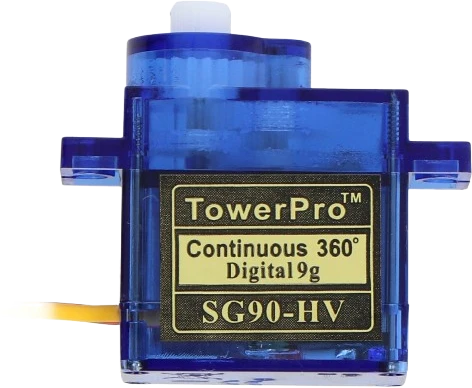
servo-sg90Compact positional servo
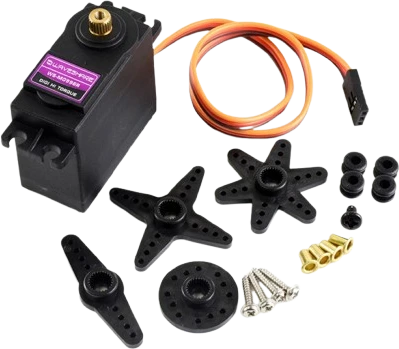
servo-mg996r-straightHigh-torque servo variant
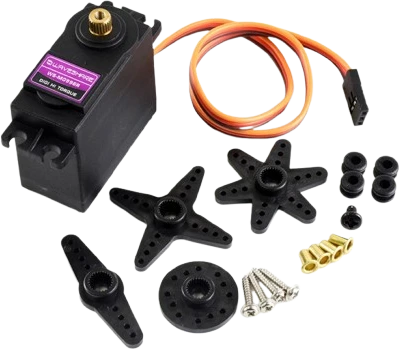
servo-mg996r-starHigh-torque servo variant
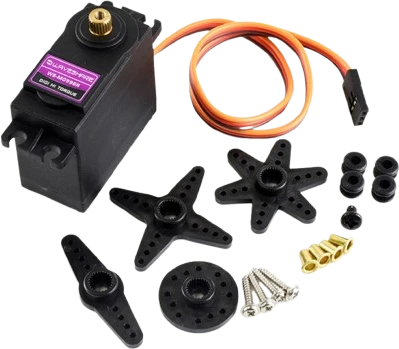
servo-mg996r-roundHigh-torque servo variant
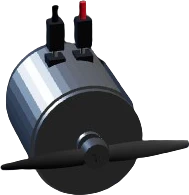
dc-motorBrushed direct-current motor
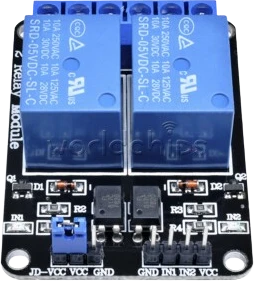
relay-5vElectromechanical switch
Drop the MG996R Servo · Cross Horn into a circuit, write firmware, and simulate it in your browser, then deploy to real hardware. All in one editable Tinkered project.