RC car and boat steering
The high torque and metal gears make the MG996R a common choice for driving the steering linkage or rudder on larger RC models where micro servos strip or stall.
High-torque metal-gear analog servo from TowerPro that delivers up to about 11 kg·cm at 6V from a standard 50Hz PWM signal.
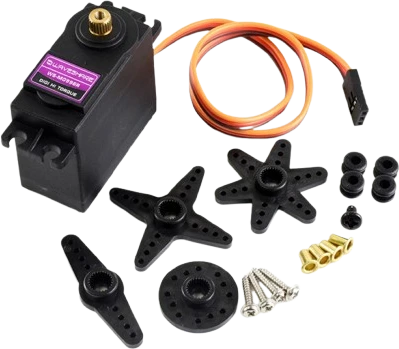
The MG996R is a high-torque analog hobby servo built around a metal gear train and a dual ball-bearing output shaft. It runs on 4.8V to 7.2V and is commanded by a single-wire 50Hz PWM control pulse, which makes it a mechanically compatible, higher-muscle upgrade for the plastic-gear SG90/MG90 class of micro servos. This straight-horn variant ships with a single-arm horn suited to push-pull linkages and RC-style steering.
Torque and speed both scale with supply voltage. The datasheet rates stall torque at roughly 9.4 kg·cm at 4.8V and about 11 kg·cm at 6V, with a no-load transit speed near 0.17 s/60 degrees at 4.8V and 0.14 s/60 degrees at 6V. A 5 microsecond dead band keeps hold position reasonably stable. The body measures about 40.7 x 42.9 x 19.7 mm and weighs around 55 g.
The catch with all that torque is current. Running current sits around 500-900mA at 6V, and a hard stall can pull roughly 2.5A. That current profile, rather than the simple PWM logic interface, is what dictates most of the wiring decisions for this servo.
| Pin | Function | Type |
|---|---|---|
VCC VCC (4.8-7.2V) | Power | Power in |
GND GND | Power | Power in |
SIG PWM Signal | PWM servo control pulse | Digital input |
Verified from the Tinkered component library · TowerPro.
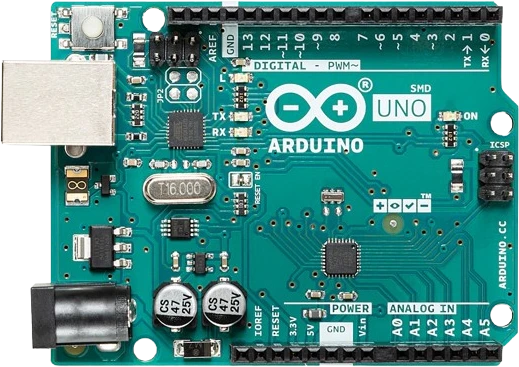
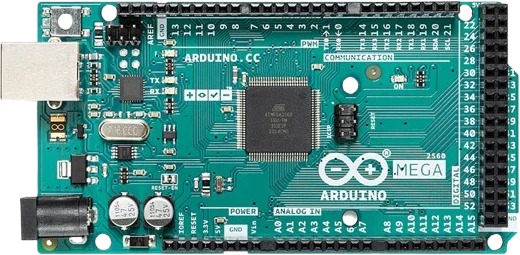
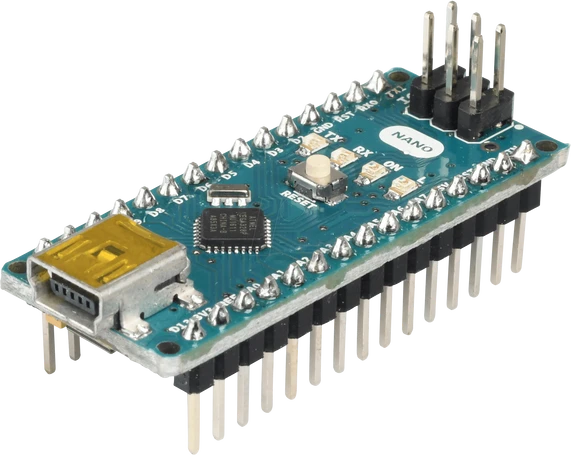
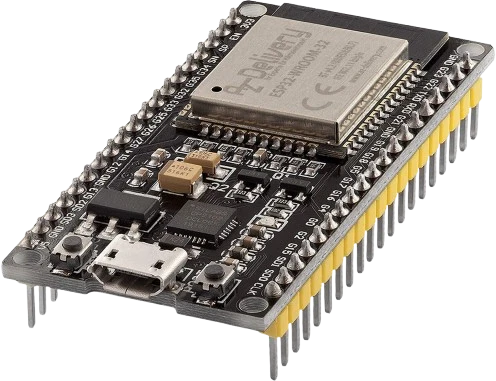
The MG996R Servo · Straight Horn connects to any of the microcontrollers supported in Tinkered. Mind the 6 V logic level on 3.3 V boards.
The MG996R can pull about 2.5A at stall, far beyond what the Arduino regulator or a USB port can supply. Doing this causes voltage sag, random resets, and possible regulator damage. Use a separate 5-6V supply.
When the servo runs from its own supply, its ground must still be connected to the Arduino ground. Skipping this leaves the PWM signal without a shared reference, so the servo twitches or does not respond at all.
The usable rotation from standard 1-2ms pulses is closer to 120 degrees on many MG996R units. Commanding pulses that push past the mechanical limit makes the servo buzz, draw stall current, and heat up while it grinds against the endstop.
Holding a heavy load against gravity keeps the motor near stall, drawing high current continuously and heating the gearbox. Mechanically balance the load or de-energize between moves rather than letting it fight a stall indefinitely.
Each move produces a sharp inrush that can dip the shared supply and glitch sensors or the microcontroller. Omitting a decoupling capacitor across the servo rails is a frequent cause of erratic behavior in multi-servo builds.
The high torque and metal gears make the MG996R a common choice for driving the steering linkage or rudder on larger RC models where micro servos strip or stall.
Used at the shoulder and base joints of small robotic arms and grippers where the extra holding torque is needed to lift a payload against gravity.
Drives heavier pan-tilt rigs carrying cameras or ultrasonic sensors that would overload a lighter SG90-class servo.
Provides the muscle to actuate jaws, wings, and other spring-loaded or weighted mechanisms in animatronic and Halloween builds.
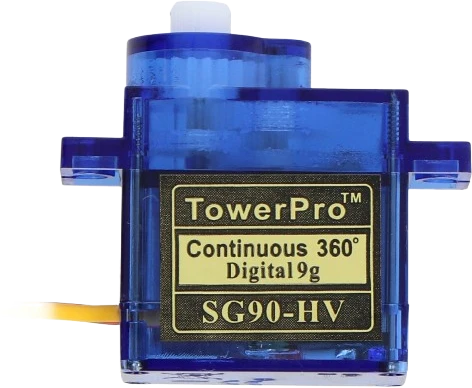
servo-sg90Compact positional servo
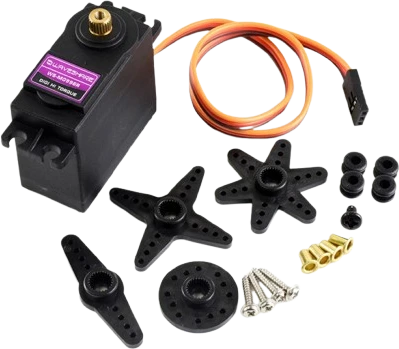
servo-mg996r-crossHigh-torque servo variant
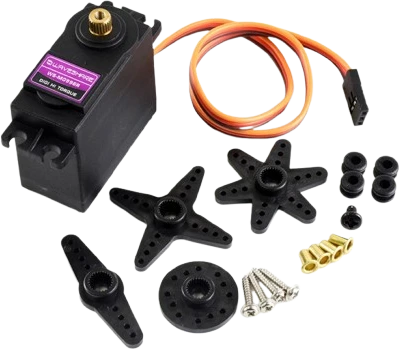
servo-mg996r-starHigh-torque servo variant
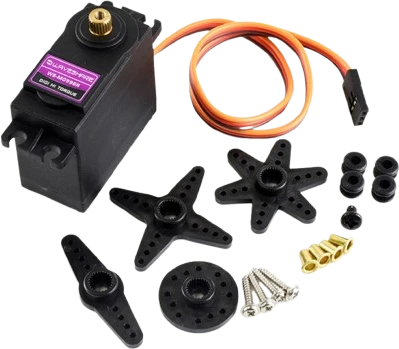
servo-mg996r-roundHigh-torque servo variant
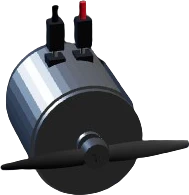
dc-motorBrushed direct-current motor
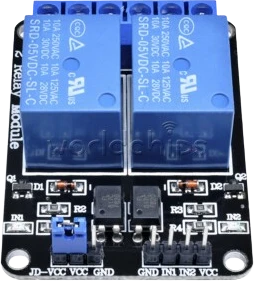
relay-5vElectromechanical switch
Drop the MG996R Servo · Straight Horn into a circuit, write firmware, and simulate it in your browser, then deploy to real hardware. All in one editable Tinkered project.