Robotic arm joints
Its high torque and metal gears make it a common choice for the shoulder and elbow joints of small robotic arms that lift real payloads.
A high-torque, metal-gear positional RC servo that delivers up to 11 kg·cm of stall torque under standard 50Hz PWM control.
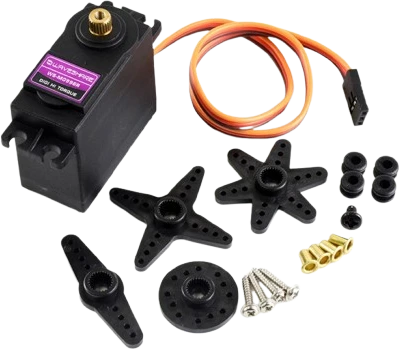
The MG996R is a high-torque analog hobby servo from TowerPro, widely treated as an upgraded MG995 with all-metal gears and a dual ball-bearing output shaft for better durability under load. It is a positional servo with roughly 180 degrees of travel, and this variant ships with a four-arm star horn for attaching linkages, arms, and brackets.
Control follows the standard RC servo convention: a 50Hz signal (20ms period) where the pulse width sets the target angle, with about 1ms near one extreme, 1.5ms at center, and 2ms near the other extreme. Internal control electronics and a feedback potentiometer hold the commanded position. It produces roughly 9.4 kg·cm of stall torque at 4.8V and 11 kg·cm at 6V, moving 60 degrees in about 0.17s at 4.8V and 0.14s at 6V, with a 5 microsecond dead band.
It runs on a 4.8-7.2V supply (6V nominal per the verified specs) and the SIG line accepts the logic-level control pulse. Because it is a geared actuator, current draw rises sharply with mechanical load and can spike toward 2.5A at 6V under stall. The unit measures 40.7 x 42.9 x 19.7mm and weighs about 55g.
| Pin | Function | Type |
|---|---|---|
VCC VCC (4.8-7.2V) | Power | Power in |
GND GND | Power | Power in |
SIG PWM Signal | PWM servo control pulse | Digital input |
Verified from the Tinkered component library · TowerPro.
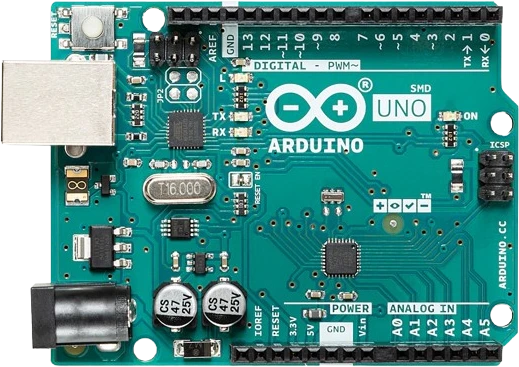
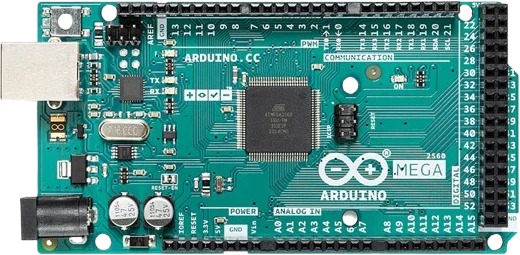
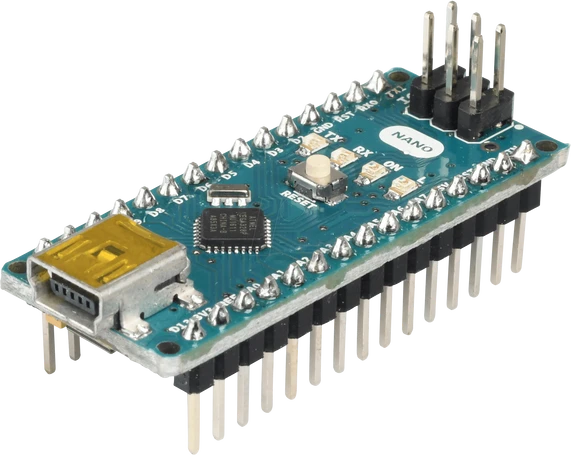
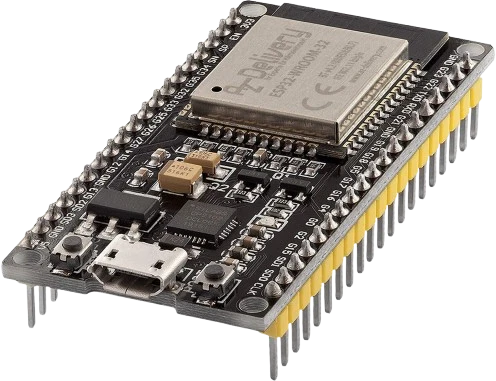
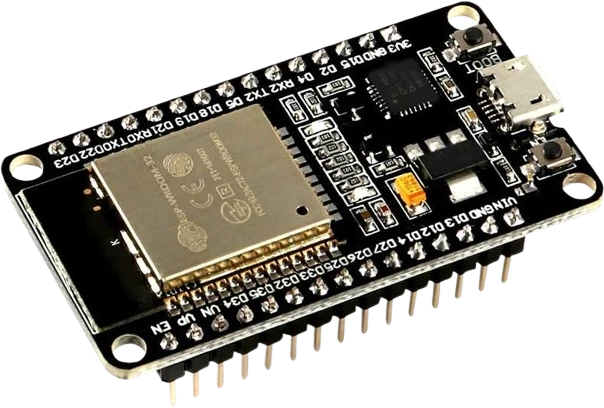
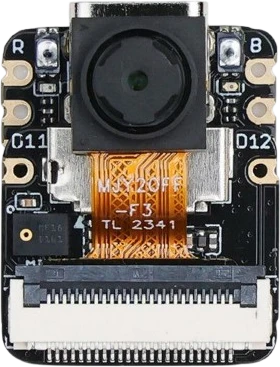
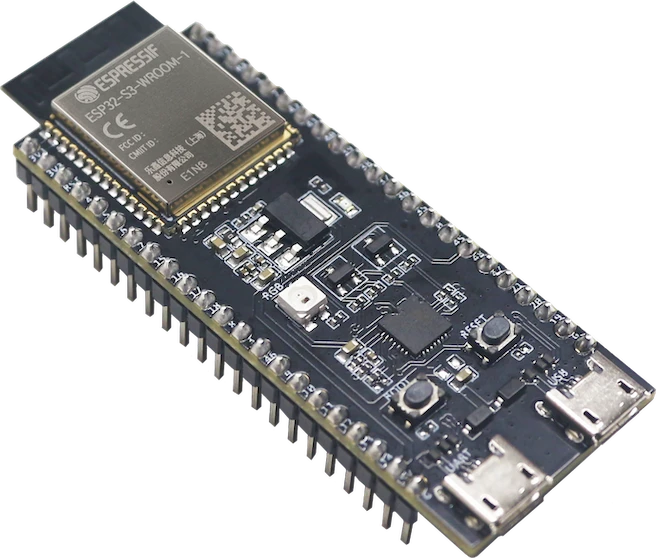
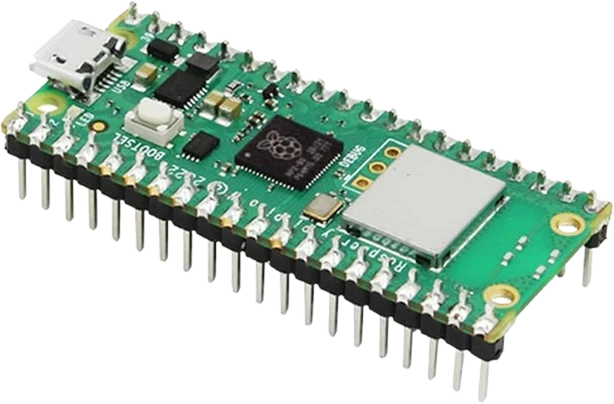
The MG996R Servo · Star Horn connects to any of the microcontrollers supported in Tinkered. Mind the 6 V logic level on 3.3 V boards.
The MG996R can draw close to 2.5A at stall, far beyond what a USB-powered board's regulator supplies. Running it off the 5V pin causes voltage sag, glitching, and repeated resets. Use a separate supply sized for the load.
When the servo runs on its own supply, the control pulse has no valid reference unless that supply's ground is also connected to the controller ground. Without it the servo jitters or ignores commands.
This is a positional 180 degree servo, not a continuous-rotation servo. Sending pulse widths does not spin it endlessly; it seeks and holds an angle. Only a physically modified unit rotates continuously.
Pushing pulse widths beyond the usable 1-2ms range drives the servo into its end stops, where it buzzes, stalls, and strains the gears while drawing peak current. Keep commanded pulses within the rated travel.
The sudden current surge when the motor starts moving pulls the rail down and can corrupt nearby logic. Omitting a bulk capacitor across the servo supply leads to intermittent resets and erratic motion, especially with multiple servos.
Its high torque and metal gears make it a common choice for the shoulder and elbow joints of small robotic arms that lift real payloads.
Two MG996R servos on a bracket give steady pan and tilt control for cameras, ultrasonic sensors, or solar trackers.
The star horn and strong output shaft suit steering and throttle actuation in RC cars and boats where torque matters.
Positional control and holding torque let it drive jaws, wings, and other animatronic mechanisms on cue.
Its torque is enough to actuate simple door latches, gates, and dispensing arms in automation projects.
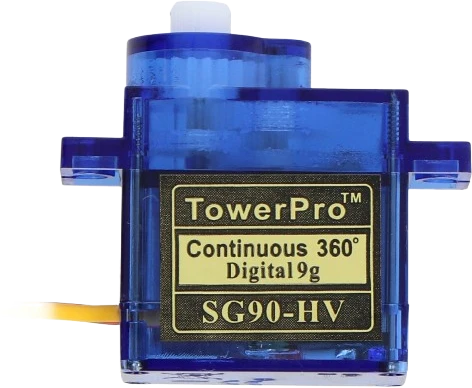
servo-sg90Compact positional servo
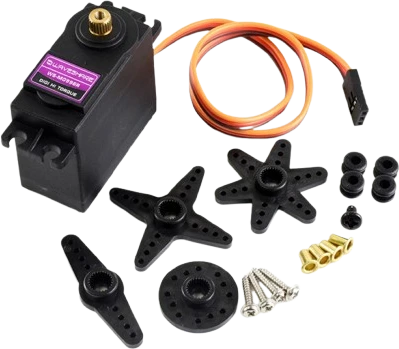
servo-mg996r-straightHigh-torque servo variant
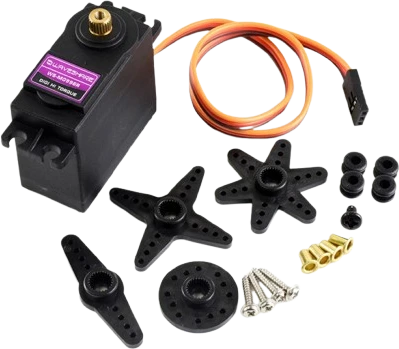
servo-mg996r-crossHigh-torque servo variant
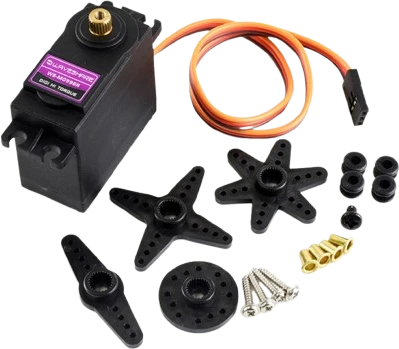
servo-mg996r-roundHigh-torque servo variant
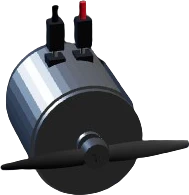
dc-motorBrushed direct-current motor
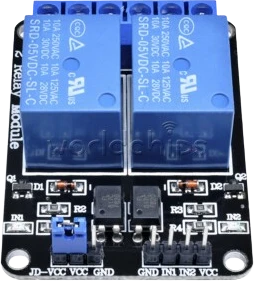
relay-5vElectromechanical switch
Drop the MG996R Servo · Star Horn into a circuit, write firmware, and simulate it in your browser, then deploy to real hardware. All in one editable Tinkered project.