Blue LED
A 5mm through-hole blue indicator LED built on an InGaN chip, with a forward voltage near 3.2V that requires a series current-limiting resistor.

What is the Blue LED?
The Blue LED is a standard 5mm through-hole indicator that emits blue light from an InGaN (indium gallium nitride) semiconductor chip, with a peak emission wavelength around 460 to 465nm. Like any LED it is a polarized, two-lead device: current flows only from the anode (+) to the cathode (-), so orientation matters.
Its most important electrical trait is a relatively high forward voltage of about 3.2V, well above the roughly 2V of a typical red or green LED. This is a direct consequence of the wide-bandgap InGaN material used for blue and white emitters. The part is designed to run at about 20mA, with an absolute maximum DC forward current of 30mA and a reverse voltage rating of only 5V. It must always be driven through a series resistor rather than connected straight across a supply.
The body is a 5mm domed epoxy package (about 5mm in diameter and 8.6mm tall) with two leads on a 2.54mm pitch, suitable for breadboards and perfboard. The longer lead is the anode and the shorter lead, next to the flat on the lens flange, is the cathode.
Specifications
- Forward voltage
- 3.2 V
- Dimensions
- 5 × 8.6 × 5 mm
Verified from the Tinkered component library.
Circuit requirements
- Observe polarity: the anode (+) is the longer lead and the cathode (-) is the shorter lead beside the flat spot on the lens. The LED only conducts and lights when the anode is more positive than the cathode.
- Always add a series current-limiting resistor. With a 5V supply and the ~3.2V forward drop, sizing for 20mA gives R = (5 - 3.2) / 0.02 = 90 ohm, so a 100 ohm resistor is a close fit; a common 220 ohm resistor yields about 8mA, which is dimmer but safe.
- Keep continuous current at or below the recommended 20mA. The absolute maximum DC forward current is 30mA, and running near that limit accelerates light degradation.
- The reverse voltage rating is only 5V, so do not place the LED across sources that can reverse-bias it beyond that.
- On 3.3V logic (for example an ESP32 or Pi pin) the ~3.2V forward voltage leaves almost no headroom, so a small resistor value is needed and brightness will be limited compared with a 5V rail.
Board compatibility
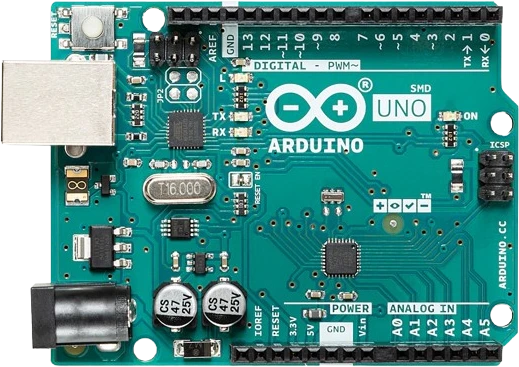
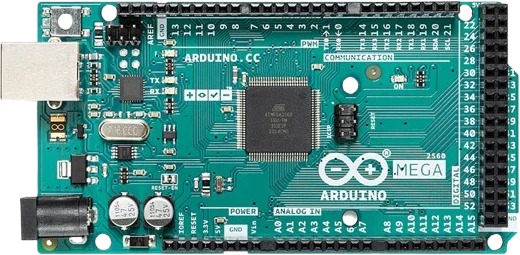
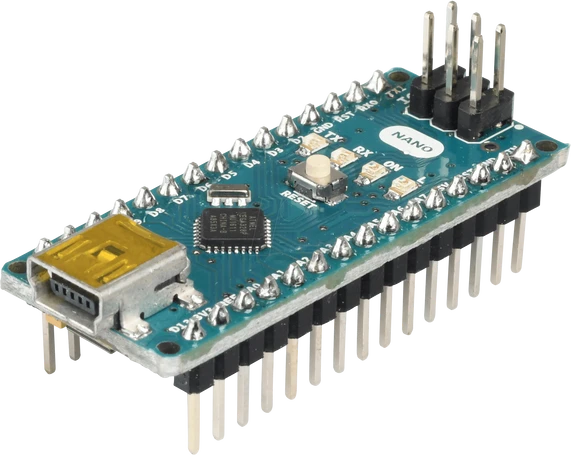
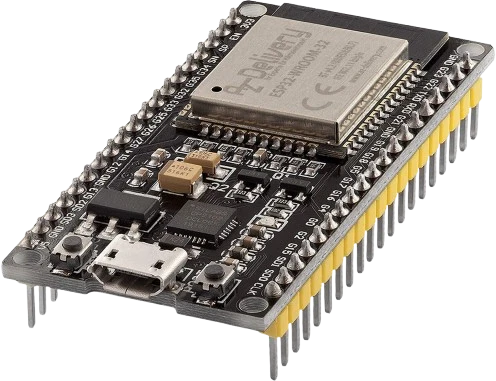
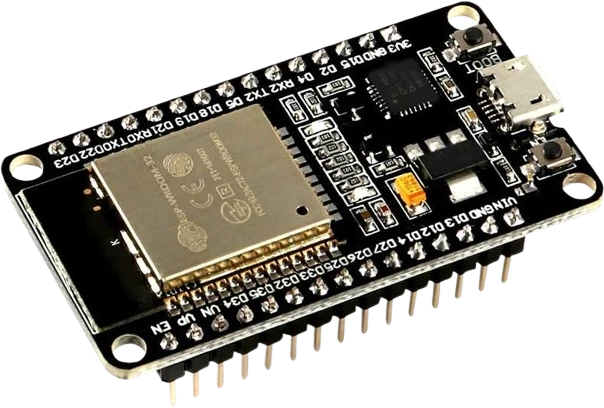
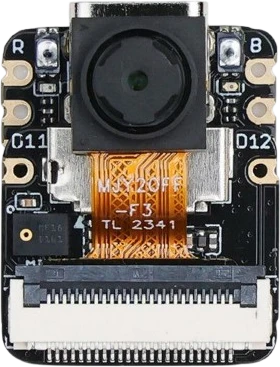
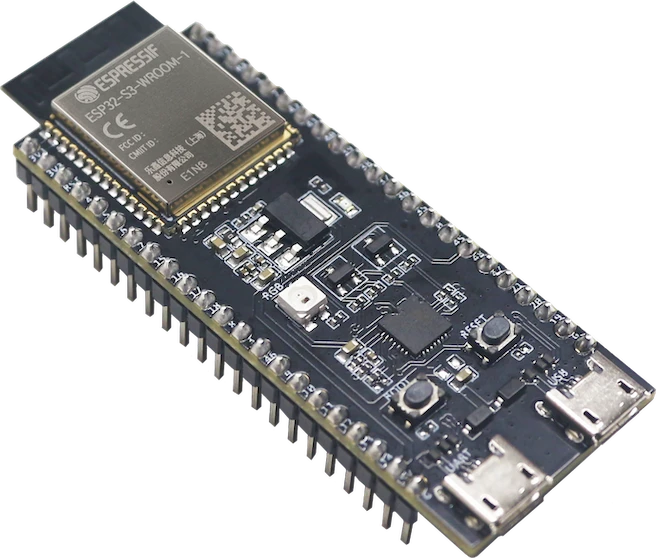
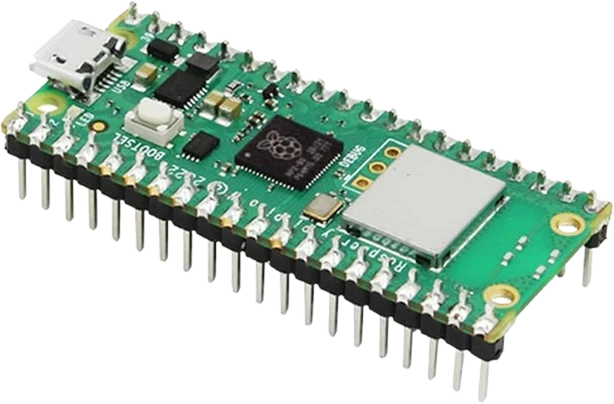
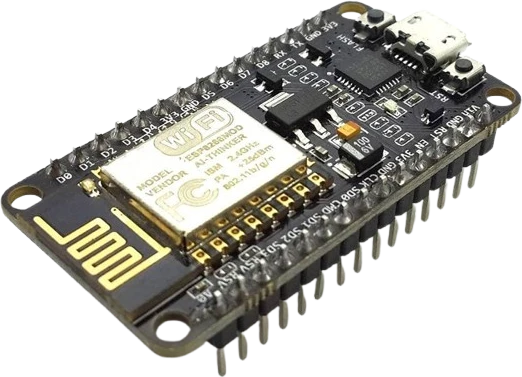
The Blue LED connects to any of the microcontrollers supported in Tinkered.
Common Blue LED mistakes
Installing the LED backwards
With the anode and cathode swapped the LED is reverse-biased and stays dark. Match the long lead (anode) to the more positive side and the short lead by the flat (cathode) to ground or the resistor.
Leaving out the series resistor
Connecting the LED directly across 5V lets current run away far past 30mA, and the LED overheats and burns out almost immediately. A current-limiting resistor is mandatory in every LED branch.
Reusing a red LED's resistor math
Blue LEDs drop about 3.2V versus roughly 2V for red or green. Copying a red LED's resistor value pushes too little current on a low-voltage rail, or the wrong current on 5V, so recompute R for the ~3.2V forward voltage.
Expecting normal brightness on a 3.3V supply
Because the forward voltage (~3.2V) is nearly the whole 3.3V rail, there is very little voltage left across the resistor, so the LED runs dim. Use a 5V source when full brightness is needed.
Driving it at the absolute maximum current
The 30mA DC rating is a ceiling, not a target. Continuously running near it causes premature brightness loss; design around the recommended 20mA (or less) for indicator use.
More leds & addressable




Build with the Blue LED.
Drop the Blue LED into a circuit, write firmware, and simulate it in your browser, then deploy to real hardware. All in one editable Tinkered project.