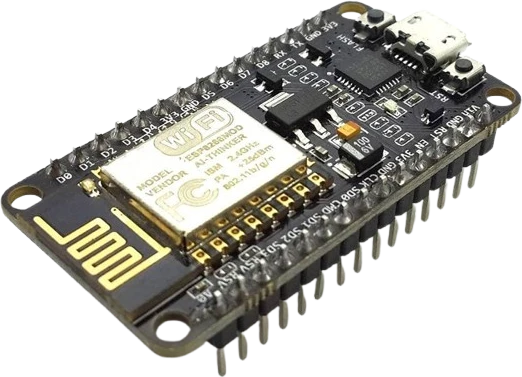
3D printer and CNC axis
The default motor for X/Y/Z axes and extruders on desktop 3D printers and small CNC or laser machines, paired with A4988 or DRV8825 drivers on a control board.
A NEMA 17 bipolar stepper motor with 1.8 degree steps (200 steps per revolution) and roughly 43 N.cm of holding torque, built for precise open-loop positioning.
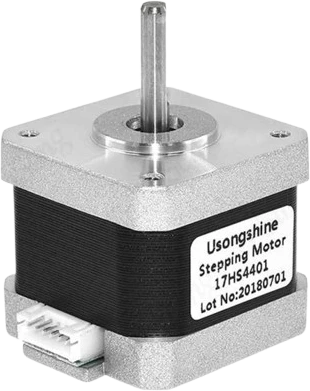
The 17HS4401S is a NEMA 17 (42.3 mm frame) two-phase bipolar stepper motor. Its 1.8 degree step angle divides each rotation into 200 full steps, and with microstepping a driver can subdivide those steps much further for smooth, repeatable motion without any position feedback. It is one of the most common steppers in desktop 3D printers, small CNC machines, and hobby robotics.
Each of the two phases (coils) is rated at 1.7 A with a rated coil voltage of 2.6 V and a phase resistance of about 1.5 ohms, giving a holding torque of roughly 43 N.cm (0.43 N.m). The motor has four leads: Black and Green form coil A, while Red and Blue form coil B. It weighs about 280 g and uses a standard 5 mm output shaft.
Because the coils draw well over an amp and are highly inductive (about 2.8 mH per phase), the 17HS4401S is never wired straight to Arduino pins. It is driven through a dedicated stepper driver such as an A4988, DRV8825, TB6600, or L298N, which handles current regulation, coil sequencing, and microstepping while the microcontroller only issues step and direction signals.
| Pin | Function | Type |
|---|---|---|
BLACK Black / A+ | Digital Coil A positive lead | Free |
GREEN Green / A- | Digital Coil A negative lead | Free |
RED Red / B+ | Digital Coil B positive lead | Free |
BLUE Blue / B- | Digital Coil B negative lead | Free |
Verified from the Tinkered component library · HandsOnTec / Usongshine.
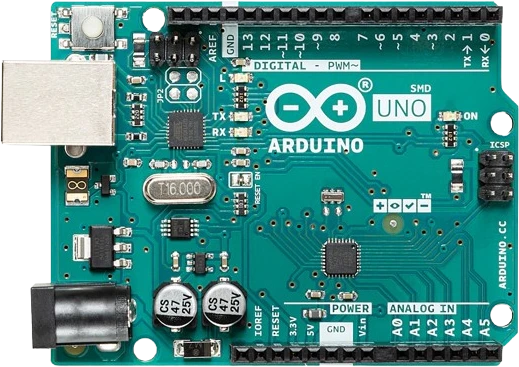
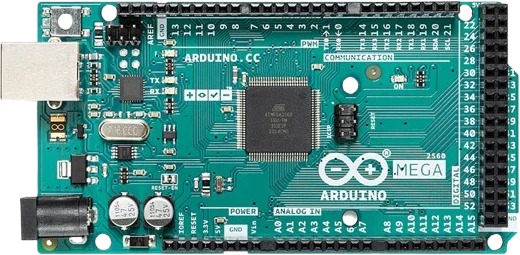
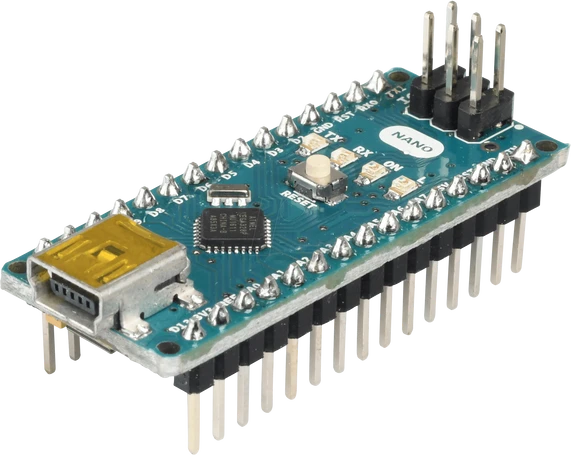
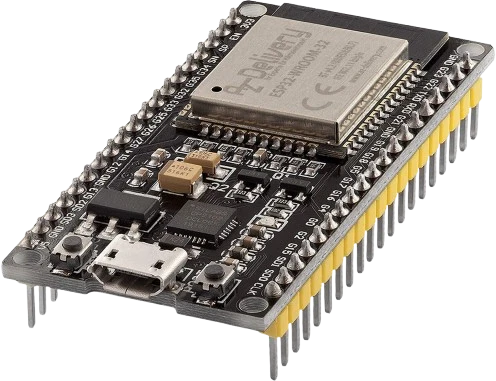
The 17HS4401S Stepper connects to any of the microcontrollers supported in Tinkered. Mind the 2.6 V logic level on 3.3 V boards.
The 17HS4401S needs 1.7 A per phase through inductive coils. Connecting the four leads directly to microcontroller pins will not turn the motor and can damage the board. Always drive it through a stepper driver.
A4988 and DRV8825 boards ship with the Vref pot at an arbitrary setting. If you do not tune it to around the 1.7 A rating (or below), the motor and driver overheat and enter thermal shutdown, producing stuttering and missed steps.
If you split a coil across the driver's two outputs (for example mixing Black with Red instead of Black with Green), the motor buzzes and vibrates in place instead of rotating. Confirm the Black/Green and Red/Blue pairs with a continuity test.
Connecting or disconnecting the stepper while the driver is powered creates a back-EMF voltage spike that commonly kills A4988/DRV8825 chips. Always power down before touching the motor leads.
Holding torque near 43 N.cm applies at rest and low speed. As step rate climbs, the 2.8 mH coil inductance limits current and torque falls off, so ramp speed with acceleration and avoid demanding heavy loads at high RPM.
The default motor for X/Y/Z axes and extruders on desktop 3D printers and small CNC or laser machines, paired with A4988 or DRV8825 drivers on a control board.
Its precise, repeatable steps make it ideal for motorized camera sliders, timelapse dollies, and pan-tilt heads where smooth, controllable motion matters.
Used for open-loop joints and rotary stages in hobby robotic arms, plotters, and telescope mounts where a known step count maps directly to position.
Drives peristaltic pumps, pill or treat dispensers, and motorized window blinds, holding position firmly between moves thanks to its high holding torque.
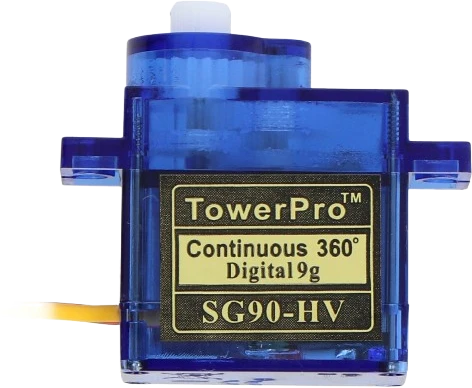
servo-sg90Compact positional servo
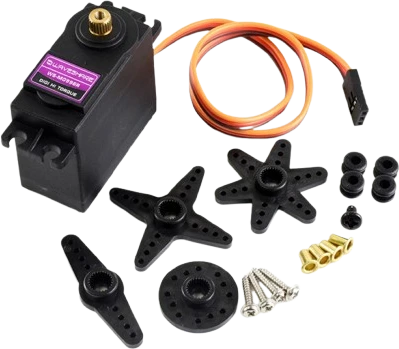
servo-mg996r-straightHigh-torque servo variant
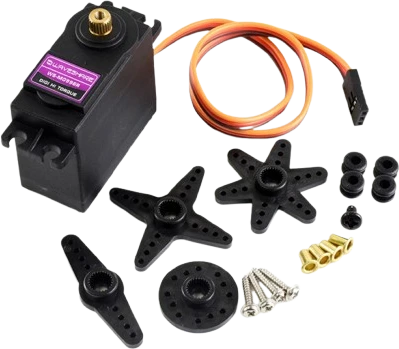
servo-mg996r-crossHigh-torque servo variant
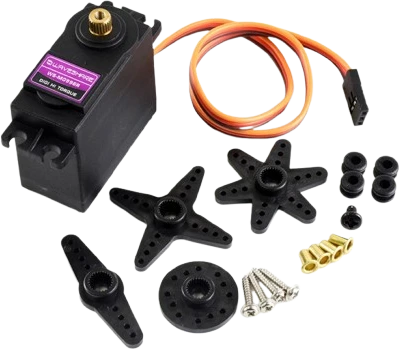
servo-mg996r-starHigh-torque servo variant
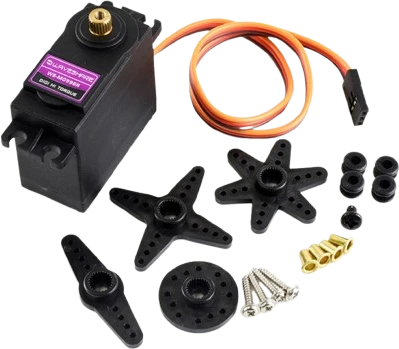
servo-mg996r-roundHigh-torque servo variant
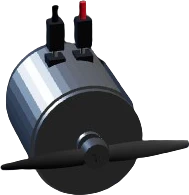
dc-motorBrushed direct-current motor
Drop the 17HS4401S Stepper into a circuit, write firmware, and simulate it in your browser, then deploy to real hardware. All in one editable Tinkered project.